
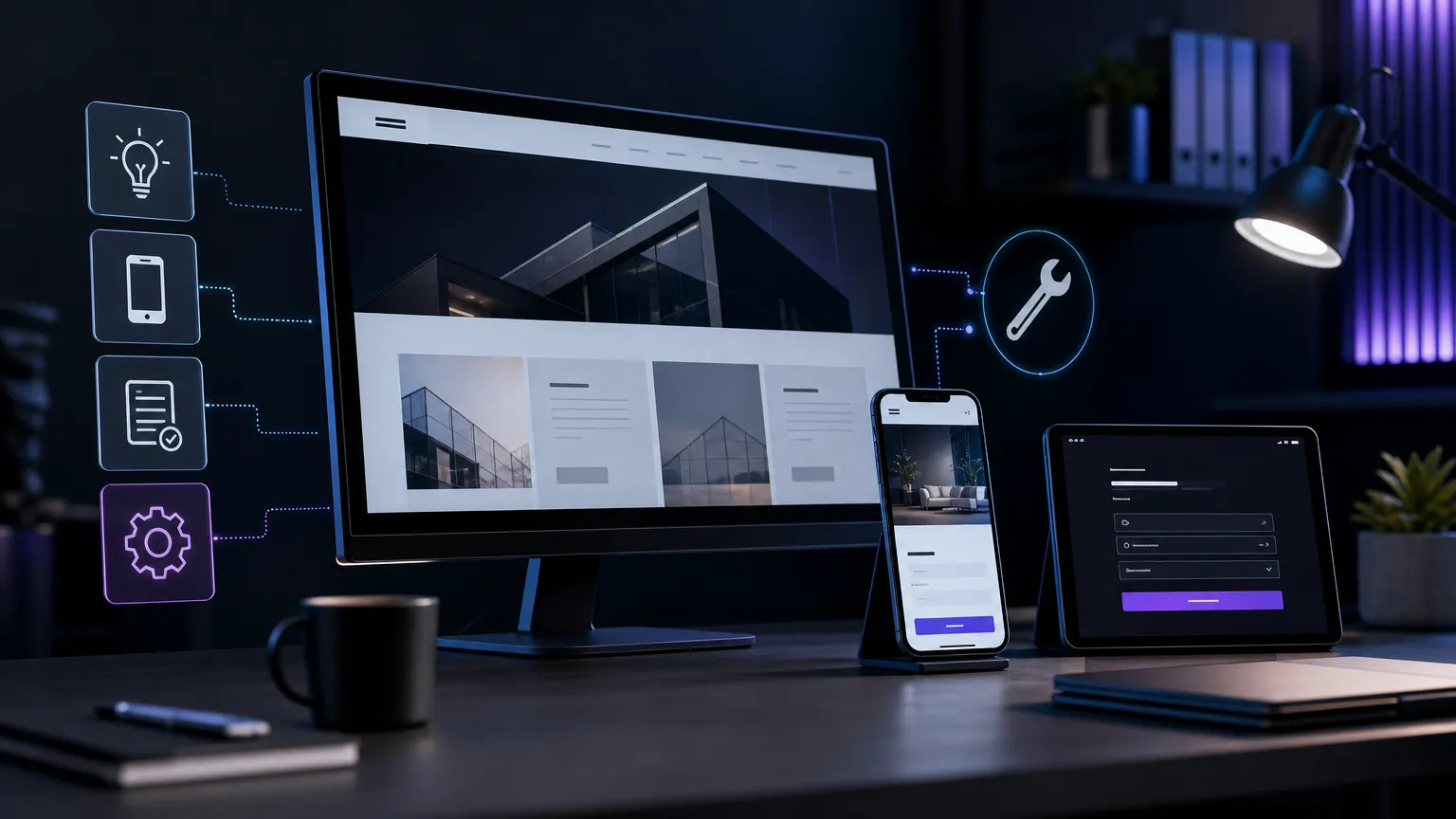
Renovating your business website is more than a visual update—it’s an opportunity to realign your digital presence with your goals and user expectations. Before you begin, it’s crucial to systematically review the elements that most impact user experience, lead generation, and ongoing site management. Drawing from our own process at E Tech Code, where we use Astro, support both Spanish and English, maintain clear service and portfolio pages, and rely on a project inquiry form with CI/CD deployment, this guide outlines the essential prechecks every business should complete before launching a website renovation.
Clarifying Your Offer: Is Your Value Proposition Obvious?
The foundation of any effective business website is a clear, focused offer. Visitors should immediately understand what your business does and how you can help them. At E Tech Code, we separate our service descriptions from our portfolio, making it easy for users to distinguish between what we provide and examples of our work.
When reviewing your own site, ask: Does each page communicate a single, clear message? Are your services described in accessible language? Avoid mixing multiple offers or using jargon that could confuse visitors. If your value proposition is unclear, consider restructuring your content or creating dedicated pages for each service. This clarity not only improves user understanding but also streamlines the renovation process by keeping the project aligned with your business objectives.
Evaluating the Mobile Experience: Is Navigation Seamless on All Devices?
Mobile usability is now a baseline expectation. Responsive design is essential, but true mobile-friendliness involves more than just resizing elements. It requires smooth navigation, fast load times, and intuitive interactions.
On our own site, Astro helps us deliver quick load times and optimized mobile layouts. We rigorously test the user journey on various devices to ensure visitors can easily access service information, browse the portfolio, and use the contact form. As you assess your site, simulate the entire mobile experience. Look for issues like slow-loading images, hard-to-tap buttons, or confusing navigation paths.
If you find friction points, prioritize them in your renovation scope. Improving mobile usability can significantly reduce bounce rates and increase engagement, making it a critical checkpoint before any redesign.
Reviewing Forms: Are They Simple and Reliable for Users?
Forms are often the main gateway for leads and inquiries. Overly complex or unreliable forms can discourage users from reaching out. At E Tech Code, our project inquiry form is designed to save user input before offering to continue the conversation via WhatsApp, ensuring that no information is lost and users have a clear next step.
When auditing your forms, check for clarity, brevity, and robust error handling. Are required fields clearly indicated? Does the form retain information if the process is interrupted? Is the submission process intuitive? Consider whether integrating messaging apps or multi-step forms would genuinely improve the experience, but avoid adding unnecessary complexity.
A user-friendly, reliable form increases the likelihood of receiving quality inquiries and should be a central focus in your renovation planning.
Assessing Maintenance and Deployment: Can You Support the Site Long-Term?
A successful website renovation doesn’t end at launch. Ongoing maintenance and efficient deployment are vital for keeping your site secure, up-to-date, and consistent. At E Tech Code, we use CI/CD pipelines to automate testing and deployment, minimizing downtime and manual errors.
Evaluate your current maintenance process: Are updates straightforward, or do they require excessive manual effort? Is your deployment process reliable, or does it risk introducing errors? If maintenance is cumbersome, include improvements to automation and deployment in your renovation scope. Streamlining these processes not only reduces long-term costs but also ensures your site remains stable and current.
Deciding What to Exclude: Keeping the Project Focused
One of the most important—and often overlooked—steps in planning a website renovation is deciding what not to include. Expanding the scope with every possible feature or redesigning every page can lead to delays and unnecessary complexity.
For our own site, we focused on essential elements: bilingual content, clear service and portfolio pages, a practical inquiry form, and WhatsApp integration. We intentionally left out features like a blog or e-commerce, which could be added later if needed.
Before finalizing your renovation plan, list all potential features and prioritize them based on business value and feasibility. Exclude or defer low-priority items to keep the project manageable and aligned with your core objectives. This discipline helps ensure a timely, effective launch.
Conclusion: Structured Prechecks Set the Stage for Success
A methodical review of your website’s offer clarity, mobile experience, form usability, and maintenance processes is essential before starting any renovation. These checkpoints help define a realistic project scope, reduce risks, and ensure that your new site supports both user needs and business goals.
By applying these prechecks—as demonstrated in our own use of Astro, bilingual content, dedicated service and portfolio pages, a thoughtfully designed inquiry form, and CI/CD deployment—you can approach your website renovation with confidence. This structured preparation leads to a site that not only looks modern but also delivers reliable performance and supports your ongoing growth.
Explore our website, process automation and app improvement offers. Scope is agreed after reviewing your needs.