
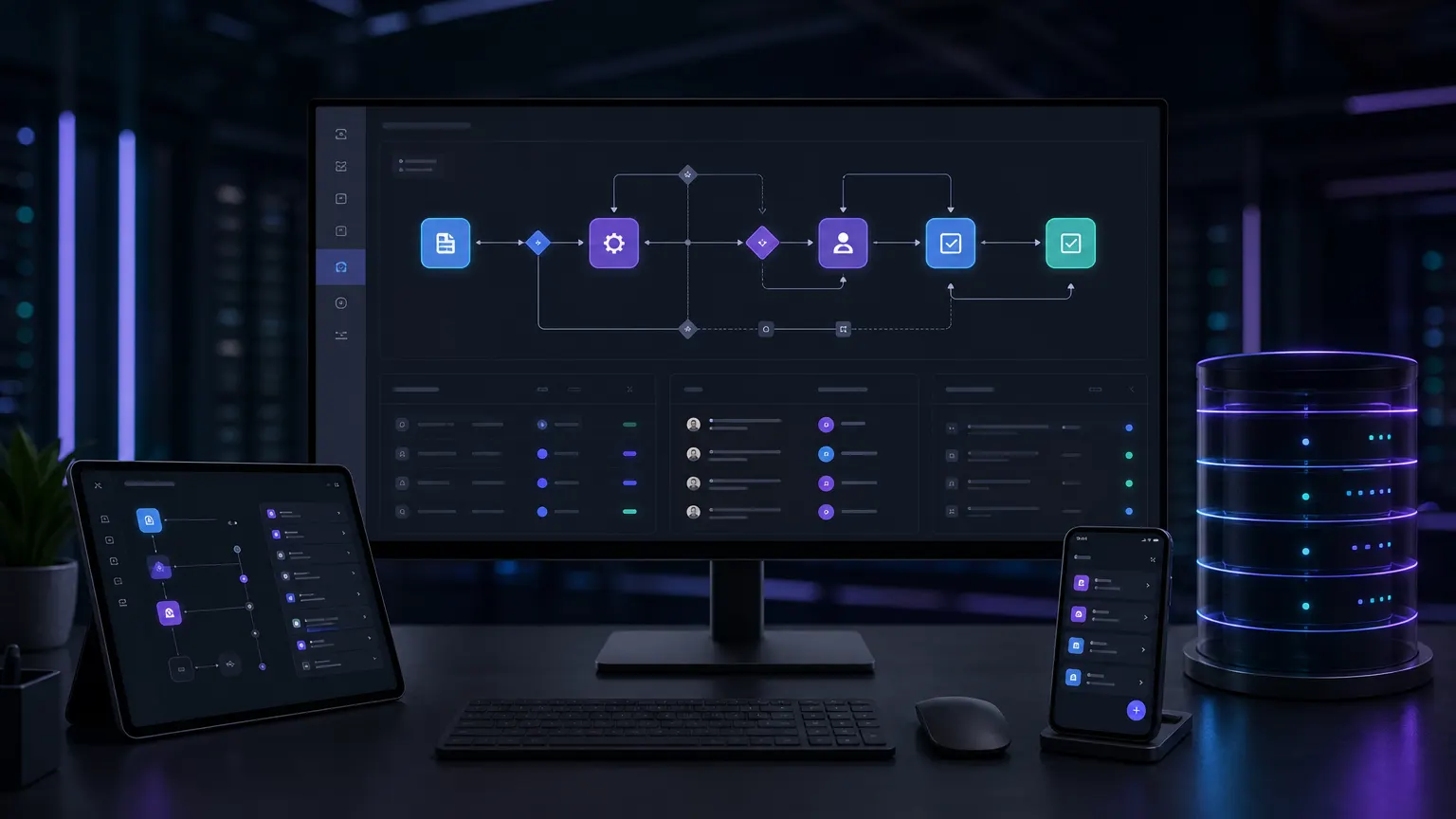
Automating request handling can significantly improve operational efficiency, but it also introduces the risk of losing essential human oversight. At E Tech Code, we encountered this challenge directly: how to streamline the preparation of incoming requests without compromising the quality of human decision-making or the traceability of actions. Drawing from our internal experience—where requests are recorded in PostgreSQL with full audit trails and WhatsApp communications are managed manually—this article details our approach to building a transparent, responsible workflow that balances automation with necessary human review.
Understanding the Operational Problem
The core issue we faced was balancing speed and accuracy in request processing. Requests arrive continuously and must be handled promptly, but not all can or should be processed automatically. Some require human judgment to ensure correctness or compliance. Relying solely on automation risked inappropriate approvals or missed exceptions, while a fully manual process slowed down operations and made it harder to track accountability.
Additionally, the use of WhatsApp as a communication channel introduced further complexity. Unlike structured digital forms, WhatsApp messages are conversational and require manual interpretation. Integrating these into a streamlined workflow demanded a hybrid approach that respected both the need for automation and the realities of manual input.
Leveraging PostgreSQL for Visibility and Auditability
To ensure every request could be tracked and audited, we selected PostgreSQL as our central repository. This choice was based on its reliability, support for detailed queries, and ability to maintain an audit trail through built-in features and extensions. Each request is logged with timestamps, status changes, and the identity of the responsible party.
This structure provides a clear, chronological record of every action taken on a request. Automated steps and human interventions are both recorded, making it easy to review the history of any request and identify where decisions were made. This level of visibility is essential for operational monitoring and for maintaining trust in the process.
Other options, such as NoSQL databases or external workflow tools, were considered but set aside due to either insufficient audit capabilities or unnecessary complexity for our needs. PostgreSQL offered a straightforward, robust solution that fit our operational context.
Defining Workflow States and Assigning Responsibilities
A key step in our process was to define explicit workflow states and assign clear responsibilities to each. We established distinct states such as “Received,” “Prepared Automatically,” “Pending Human Review,” and “Completed.” Each transition between states is triggered by either an automated process or a designated human reviewer.
By making these states and responsibilities explicit, we eliminated ambiguity and reduced the risk of tasks being overlooked or duplicated. For example, requests awaiting human review can be easily identified and prioritized. Assigning responsibilities to roles, rather than individuals, ensures continuity even when team members change.
This structured approach contrasts with informal processes, where unclear responsibilities and ambiguous statuses often lead to delays and errors. Clearly defined states and roles make the workflow transparent and manageable.
Separating Automated Preparation from Human Decisions
Our workflow deliberately separates automated preparation from human decision-making. Automated processes handle routine tasks such as validating input data, enriching information, and flagging potential issues. Once these steps are complete, the request status is updated to “Prepared Automatically.”
At this point, human reviewers step in to assess the prepared requests, make final decisions, and update the status accordingly. This division of labor reduces the manual workload for repetitive tasks while ensuring that critical decisions remain under human control.
To guard against over-reliance on automation, we implemented alerts for unusual data patterns and required human review for any flagged cases. This ensures that exceptions are not missed and that human judgment remains central where it matters most.
Integrating Manual WhatsApp Requests into the Workflow
WhatsApp requests present a unique challenge due to their unstructured, conversational nature. These are handled manually by our team, who interpret the messages and create corresponding entries in the PostgreSQL system. As the request progresses, its status is updated manually to reflect each stage of processing.
This manual integration ensures that WhatsApp-originated requests are included in the same audit trail and visibility framework as automated requests. While this approach adds some operational overhead, it preserves the flexibility and nuance required for effective communication in less structured channels.
Attempts to automate WhatsApp processing were considered but ultimately set aside, as they risked losing important context and increasing complexity without clear benefit.
Practical Steps and Lessons for Defining Scope
Based on our experience, successfully balancing automation with human oversight requires careful planning and clear definitions from the outset. Here are practical steps we recommend:
- Map the entire request lifecycle, distinguishing which tasks can be automated and which require human intervention.
- Choose a data store that supports robust audit trails and visibility—PostgreSQL proved effective for us.
- Define explicit workflow states and assign responsibilities to roles, not just individuals.
- Integrate manual channels, such as WhatsApp, in a way that maintains visibility and auditability.
- Plan for exception handling by setting up alerts and mandatory reviews for flagged cases.
Before finalizing the scope of any automation project, thoroughly review your operational context, communication channels, and decision points. Tailor your workflow to fit these realities, rather than forcing a one-size-fits-all solution. This upfront clarity minimizes rework and ensures your process improvements are both practical and sustainable.
In summary, our internal experience at E Tech Code demonstrates that with the right structure—clear states, defined responsibilities, and robust audit mechanisms—it’s possible to automate request handling without sacrificing the benefits of human oversight. This approach lays a solid foundation for future process improvements and helps maintain operational integrity as automation expands.
Explore our website, process automation and app improvement offers. Scope is agreed after reviewing your needs.