
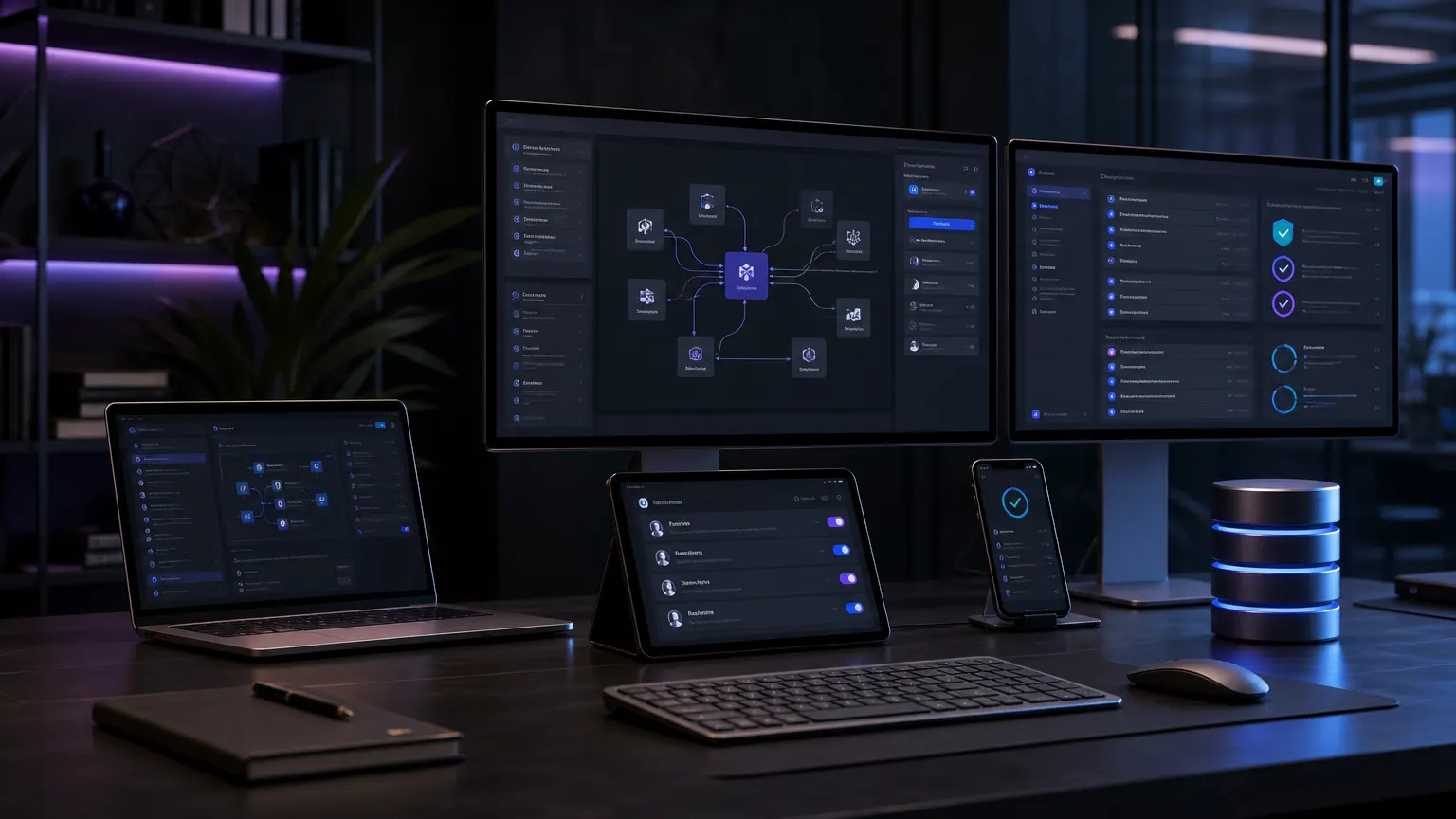
Integrating AI into business operations can unlock significant efficiencies, but unchecked automation introduces new risks. At E Tech Code, we set out to design an AI-powered agency that leverages automation while ensuring human oversight remains central. This article details the architectural decisions, permission structures, and operational boundaries we established to maintain responsible AI use without compromising agility or quality.
Isolated Container Architecture: The Foundation of Controlled Automation
Our foundational architectural choice was to run core components—specifically n8n for workflow automation and PostgreSQL for data management—within isolated containers. This approach provides clear separation between services, allowing each to operate in its own sandboxed environment. By isolating these systems, we minimize the risk of unintended interactions, data leaks, or cascading failures that could arise from a more tightly coupled setup.
Containerization also enables precise control over resource allocation and security policies. Each service can be updated, monitored, and maintained independently, which is crucial for operational integrity in an AI-driven context. We deliberately avoided a monolithic deployment, as it would have made enforcing strict access controls and targeted updates significantly more difficult. This architectural separation forms the backbone of our automation strategy, ensuring that automated processes remain contained and manageable.
Human Approval: Safeguarding Outbound Email Communications
Automated email workflows offer speed and scalability, but they also carry the risk of sending incorrect or poorly phrased messages. To address this, we implemented a mandatory human approval step for all initial outbound emails generated by our systems. Before any message is sent, a team member reviews and approves its content, ensuring alignment with communication standards and expectations.
We considered allowing fully automated email dispatch but determined that the potential for miscommunication or regulatory missteps was too high, especially for first-contact messages. The human-in-the-loop approach introduces a minor delay, but the benefits in quality assurance and risk mitigation far outweigh the costs. This gatekeeping mechanism helps maintain the professionalism and reliability of our communications.
Manual Handling of WhatsApp: Preserving Nuance in Direct Conversations
WhatsApp is a vital channel for direct client engagement, and we have chosen to keep it entirely manual. All WhatsApp messages are composed and sent by team members, rather than automated systems. This decision stems from the need to preserve the nuance, empathy, and adaptability required in real-time conversations.
While we explored the possibility of automating WhatsApp interactions, current API limitations and the risk of misinterpretation led us to maintain manual control. Automated responses could compromise the quality of engagement or fail to capture the context of a conversation. By keeping WhatsApp interactions manual, we ensure that every message is tailored and responsive to the recipient’s needs.
Conditional Meeting Scheduling: Respecting Human Preferences
Automated meeting scheduling can streamline operations, but it also risks creating conflicts or unwanted appointments. To prevent this, our system only schedules meetings after explicit human confirmation. No meeting is added to a calendar without a team member’s approval.
We evaluated fully automated scheduling based on AI-driven availability matching but found that it could not adequately account for individual preferences, priorities, or last-minute changes. By requiring explicit confirmation, we balance the efficiency of automation with the flexibility and judgment that only humans can provide. This approach helps avoid scheduling mishaps and respects the diverse needs of our team and clients.
Permission and Approval Frameworks: Enforcing Operational Boundaries
Underlying all these decisions is a robust permission and approval framework. We define clear roles and hierarchies to govern who can trigger automated actions and under what circumstances. This structure ensures that only authorized personnel can initiate sensitive workflows, reducing the risk of errors or unauthorized activity.
Rather than granting open access to automation tools, we enforce strict boundaries through permissions and approval checkpoints. This not only prevents misuse but also supports auditability and continuous improvement. By tracking approvals and decision points, we can review and refine our processes over time, ensuring that our automation remains aligned with organizational goals and standards.
Practical Takeaways: Integrating AI Automation with Human Oversight
Our experience at E Tech Code highlights the importance of deliberate architectural and operational choices when integrating AI automation. Isolating critical systems through containerization helps contain risks and maintain system integrity. Requiring human approval for sensitive communications, such as outbound emails, safeguards quality and compliance. Keeping channels like WhatsApp manual preserves the nuance essential for direct engagement, while conditional meeting scheduling respects individual preferences and avoids conflicts.
Establishing clear permission structures and approval workflows is vital to prevent automation from exceeding its intended scope. While these controls may introduce some operational friction, they serve as essential safeguards for quality, compliance, and trust. Ultimately, designing an AI agency with human oversight is not about restricting automation, but about channeling its capabilities responsibly. By thoughtfully balancing efficiency with control, organizations can harness the benefits of AI while minimizing its risks and maintaining the human touch where it matters most.